The Taming of Turkey Bay
Thursday, April 30, 2009
By Janet Aird
For
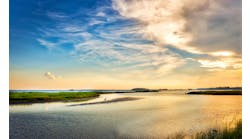
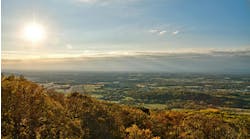
more than 30 years, dirt bikes, four-wheel all-terrain vehicles, and trucks tore
up the 2,500 acres of rolling hills, ridge tops, and shorelines of Turkey Bay,
in the Land Between the Lakes National Recreation Area (LBL) in western
Kentucky. The US Forest Service took over the first federally designated area
for off-highway vehicles (OHV) in 2005; but, by then, the damage had been
done.
“It
looked like something akin to abandoned strip mines,” says Jackie Franklin, a
soil scientist and hydrologist with LBL.
LBL
has slowly been restoring the site, which is made up of sandy, unconsolidated
coastal materials and can get up to 50 inches of rain a year. It’s open
year-round except for days when the soil is too saturated, which is both a
safety and an erosion issue, says Kyle Varel, LBL Trails and OHV assistant
manager.
The
top priority has been to break up the sheet erosion down the hillsides, says
Bill Ryan, LBL trails and OHV manager. “Over time, OHV riders created linear
runs straight up and down the hills. They can be 25 to 125 feet long and 4 or 5
feet deep.”
 |
The completed hardened stream crossing project
|
 |
| One of the seven creek crossings before the project began.
The objective is to reduce the amount of downstream sedimentation after OHVs
cross the streams and to minimize the impacts to the trails
themselves. |
The
Forest Service has been closing off some of the most impacted and unsustainable
trails and restoring the hillsides. This has the added benefit of improving
rider safety, as many of these “rogue trails” are dangerous for riders, Varel
says. The more sustainable ones have been designated as legal riding
trails.
Some
highly impacted and unsustainable trails are still open. These “challenge
areas,” which range from less than 5 acres to about 10 acres, are some of the
steepest and most difficult to navigate in the entire trail
system.
“Restoration
is ongoing,” Ryan says. “We’re taking one step at a time.”
Hillside
Restoration
In
the first step in restoring the hillsides, crews rough up the most-impacted
trails with an excavator and the less-impacted ones with an ATV-mounted tiller,
Varel explains. They typically plant seeds of a native grass such as annual rye
as a cover crop, often with 10-10-10 fertilizer, to reduce erosion until native
grasses, shrubs, and trees can establish themselves.
Their
budget and access to the sites dictate the erosion control materials used. LBL
prefers using strategically placed bioengineering materials that are already
onsite, such as fallen trees, brush, root wads, rocks, and leaf litter to slow
down the velocity of runoff water, says Ryan. Crews have tackled 8- to
10-foot-long trenches, some of them three times as deep, and covered them with
bales of hay for additional organic matter.
“Three
years later, we’re seeing small trees sprouting,” he says.
LBL
has also installed American Excelsior Curlex III sediment mats and sediment
logs. The products work well, he says, and have the added benefit of deterring
riders from driving over them.
 |
| The 12-acre watershed, "The Wall," before it was closed in 2006. |
 |
| The same area after it was restored. First, a trackhoe recontoured the hillsides and broke up the sheer sides of each trail. The, root wads, logs, rock, and bales of hay were put down to slow the velocity of stormwater. Perennial rye was broadcast as a cover until native grasses, shrubs, and trees could establish themselves. |
In
2006, LBL closed “The Wall,” a 12-acre watershed that was very highly impacted
by OHV use. Crews used a trackhoe to re-contour the hillsides and break up the
sheer sides of each trail. They broadcasted perennial rye as a cover crop,
and
then covered it with root wads, logs, rock, and rolled-out bales of hay. The hay
stayed together, Ryan says. “Roughing up soil first helped.”
Trail
Maintenance
So
far, LBL has designated approximately 106 miles of trails, which are used by
about 82,000 riders each year. These legal trails are monitored, and LBL
performs seasonal spot maintenance as needed. The trails usually just need some
reshaping and smoothing out with a small bulldozer or tractor with a blade, Ryan
says.
Streambed
Restoration
When
riders cross streambeds when the stream is flowing or when the bed is muddy,
soil in the streambed erodes badly. Since 2006, LBL has installed seven hardened
creek crossings to help reduce this erosion, as well as to provide riders with a
stable surface across the creeks.
To
create the crossings, LBL has used ArmorFlex blocks from Armortec Erosion
Control Solutions. These concrete blocks consist of 20% open space, which
eventually fills with native creek gravel and sand to increase
stability.
Crews
first excavate the creek bed, Varel says, put down an inch or two of dense-grade
gravel for a solid working base, and cover it with a geotextile filter fabric.
They use single blocks instead of factory-assembled mats because access to the
creeks is a problem. Then they hand-place the blocks on the fabric and cable
them together, forming a mat shaped to the trail. The mats span 80 to 110 feet
long and 14 feet wide or more, depending on the crossing.
“It’s
worked really well,” he says. Although the downstream sides have cut a little,
the hardened crossings have stayed stable and have greatly reduced LBL’s
maintenance costs. All restoration projects and trail improvements have been
completed by LBL’s onsite maintenance contractor, Ecotone Services Inc., or
through special volunteer workdays.
 |
| A typical user-created, rogue trail |
 |
| Crews roughed up each trail and broadcast annual rye and 10-10-10 fertilizer, then installed American Excelsior Curlex III sediment mats and sediment logs over all the seeded res. These both slowed down the velocity of runoff and deterred riders from the area. |
Working
with Riders
Getting
riders to cooperate is crucial in restoring and maintaining the area. LBL is
installing signage to educate them and providing creative opportunities to
attract riders who respect the trails. Many volunteer to work on
projects.
“People
are beginning to think, ‘Maybe we shouldn’t be tearing up the hillsides,’” says
Ryan.
He
arranged for a nearby rock quarry to donate its spoil materials. Now the site
has a 1- to 2-acre rock garden piled with more than 350 tons of rocks, from
refrigerator to basketball size, which provides a virtually maintenance-free
opportunity for riders to drive over rocks. LBL is planning to make the rock
garden even larger, with more challenges and obstacles and more lines of travel
for high-clearance vehicles, he says.
Another
addition is the half-mile-long children’s trail, which is designed for children
operating vehicles with engines of 90 cubic centimeters or less. It has
environmental education signs and small obstacles, and it is a safe place for
parents to teach their children how to ride and for children to practice their
riding skills.
“Land
Between the Lakes is committed to moving forward by promoting OHV trails,” Varel
says. “We’re trying to strike a balance by maintaining sustainable trails,
minimizing OHV-related impacts to water quality, and restoring portions of a
land base that’s been hit hard over the years by intense use... all while
allowing public access to the trail system.
Author's Bio: Janet Aird is a California writer specializing in agricultural and landscaping topics. |
Advertisement]