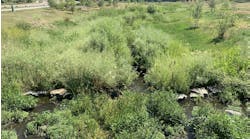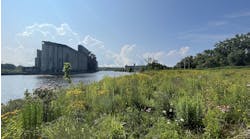
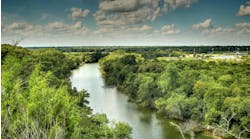

New Jersey’s Passaic River has had high concentrations of dioxin for decades, the legacy of a chemical plant that operated in the 1950s and ’60s and produced, among other things, the defoliant Agent Orange and the pesticide DDT. The state says concentrations of dioxin in fish and crabs in the Passaic are among the highest ever recorded and that the chemical continues to pose an environmental danger and a threat to human health.
Cleanup, of course, will be extremely expensive, involving dredging and disposing of the contaminated sediments. It’s estimated that the work could take a decade or more and run to the billions of dollars. New Jersey is seeking funding from a faraway source: Argentina.
In 1995, YPF SA, Argentina’s state-run oil company, acquired Maxus Energy Corp., whose predecessors had owned the chemical plant. In doing so, it also acquired Maxus’s legal liabilities. One lawsuit against YPF has already held the company liable for cleanup costs. YPF maintains, however, that hundreds of other companies, sewage facilities, and other public entities also contributed to the river’s pollution and should pay their share as well.
And in fact, EPA has already identified approximately 70 other companies that operated on the Passaic and that have agreed to pay, if not for the cleanup, at least for a portion of an EPA study on the problem.
It gets more complicated, with several towns along river supporting a bill that would exempt taxpayers—and therefore the towns and other public entities—from any liability for the cleanup. A recent article in the Wall Street Journal details the legal wrangling and potential implications.
Just sorting it out will likely take years, and meanwhile the dioxin is spreading. Although EPA’s current estimates of the cleanup costs include 8 miles of the river, the pollution now affects about 17 miles.
UPCOMING FORESTER UNIVERSITY CLASSES
Anaerobic Digestion:
System Selection for Organics Management
Presenter: Prentiss A. Shaw, P.E.
Cornerstone Environmental Group, LLC
Thurs., March 7th @ 2 p.m. EST / 11 a.m. PST, 1-1.5hrs*
Join Prentiss Shaw, P.E. for the first session in our 5-Session Organics Management Master Class Series exploring the anaerobic digestion basics, technology, and opportunities. This presentation examines anaerobic digestion technology, use, and tools, imparting attendees with the knowledge of the systems available (e.g., batch, continuous, wet, dry, etc.), the key differences, and what system offers the best opportunity for your organization.
[Read full description.]
A Cost-Efficient Asset Management Approach
Presenter: Bryan A. Chappell
Water Quality Supervisor,
Pierce County Public Works and Utilities
Thurs., March 14th @ 2 p.m. EST / 11 a.m. PST, 1-1.5hrs*
Develop your asset management in-house and save! Join Bryan Chappell to explore how to develop a cost-efficient, in-house stormwater and roadway asset management program focused on resource optimization, prioritized workloads, and increased productivity. In this webinar we’ll discuss Pierce County’s Stormwater and Asset Management Programs, including their inspection, prioritization, and maintenance of assets while meeting NPDES requirements for a MS4. Additionally, Chappell will discuss implementation costs, and how they can become cost-neutral and cost-saving over time.
[Read full description.]
Stormwater Treatment Train
Presenter: Steven I. Apfelbaum, MS
Principal Ecologist, Chairman
Applied Ecological Services
Wed., March 27th @ 2 p.m. EST / 11 a.m. PST,
1-1.5hrs*
Improve your stormwater management and water quality, and reduce your short and long-term costs…without grey infrastructure. Join Steven Apfelbaum to explore how to utilize ecological design principles and Stormwater Treatment Train (STT) concepts to effectively manage your stormwater and improve your water quality through development of ecologically and quality-of-life environments while also offering substantial short and long-term economic benefits.
[Read full description.]
FREE!
Take Control of Your Landfill
Gas Wellfield
Presenter: David Kaminski
Senior Vice President
QED Environmental Systems Inc.
Thurs., March 28th @ 2 p.m. EST / 11 a.m. PST,
1-1.5hrs*
Take control of your landfill gas wellfield! Join David Kaminski from QED Environmental Systems Inc. for a webinar that explores engineered solutions for both leachate control in gas wells and innovative approaches to LFG flow control and measurement. In this webinar, David will discuss how gas well dewatering can increase gas flow from your wells from 15% to 200% while also extending the life of the well. Additionally, we’ll explore the limitations of common gate valves for LFG flow control and how to maximize your landfill gas flow, minimize technicians' time onsite, and maintain regulatory compliance, all with a rapid return on investment.
[Read full description.]
FREE!
Get Schooled in Gravelology
Presenters:
Steve Jenkins, P.E., M.E., Local Transportation Assistance Program [LTAP] – Montana
& Ken Skorseth, Local Transportation Assistance Program [LTAP] – South Dakota
Wed., April 3rd @ 2 p.m. EST / 11 a.m. PST, 1-1.5hrs*
You don’t need to be a rocket scientist to know that the better a gravel road is made, the less it costs to maintain. Get your degree in Gravelology with the Gravel Roads Academy™ Gurus! Join Steve Jenkins, P.E., M.E. and Ken Skorseth for a FREE webinar exploring how to help your budget go the extra mile by using the latest techniques in unpaved road construction and maintenance.
[Read full description.]
Organics to BioCNG –
Making Organics Diversion Work through BioCNG
Presenter: Chris Voell
BioCNG / Cornerstone Environmental Group, LLC
Thurs., April 11th @ 2 p.m. EST / 11 a.m. PST, 1-1.5hrs*
Join Chris Voell for the second session in our 5-Session Organics Management Master Class Series exploring the opportunity to convert digester biogas into compressed natural gas (CNG) for use as vehicle fuel. This presentation examines biogas to CNG technology, the financial gain associated with this system, the cost of vehicle conversion, financial incentives available, and the environmental and community benefits associated with decreasing gasoline and diesel use.
[Read full description.]
So You Want to Set Up a Stormwater Utility?
The Top Ten Stormwater Utility Launch Failures & How to Avoid Them
Presenter: Andy Reese, P.E., LEED AP
Vice President,
AMEC Environment & Infrastructure
Thurs., April 18th @ 2 p.m. EST / 11 a.m. PST,
1-1.5hr*
Set your stormwater utility for success...not failure! Join Andy Reese, PE, LEED AP, as he explores the top ten ways that stormwater utilities fail to get off the ground successfully, and more importantly...how to avoid these. In this webinar we’ll discuss the process of establishing stormwater utilities, the top ten ways stormwater utilities are often setup for failure from the beginning, and how to design a comprehensive launch plan that successfully avoids these issues to ultimately provide your community with dedicated revenue, safe and attractive neighborhoods, ecological balance, and clean water for years to come.
[Read full description.]
FREE!
GPS North America Introduces:
Paperless Forms for Mobile Data Collection
Presenter: Todd Lewis
President, GPS North America
Thurs., May 2nd @ 2 p.m. EST / 11 a.m. PST,
1-1.5hrs*
Go beyond the limitations of paper! Join Todd Lewis, President of GPS North America —producers of the award-winning vehicle tracking system—as he shows you how to say goodbye to inefficient paper forms. In this webinar, we’ll explore how Smart Forms not only eliminates the paper, but takes your documentation to the next level including embedded pictures, sketching on pictures, GPS time and date stamp, calculations, and bar code scans, as well as integrating with accounting and business software, and delivering itself to the intended recipients.
[Read full description.]